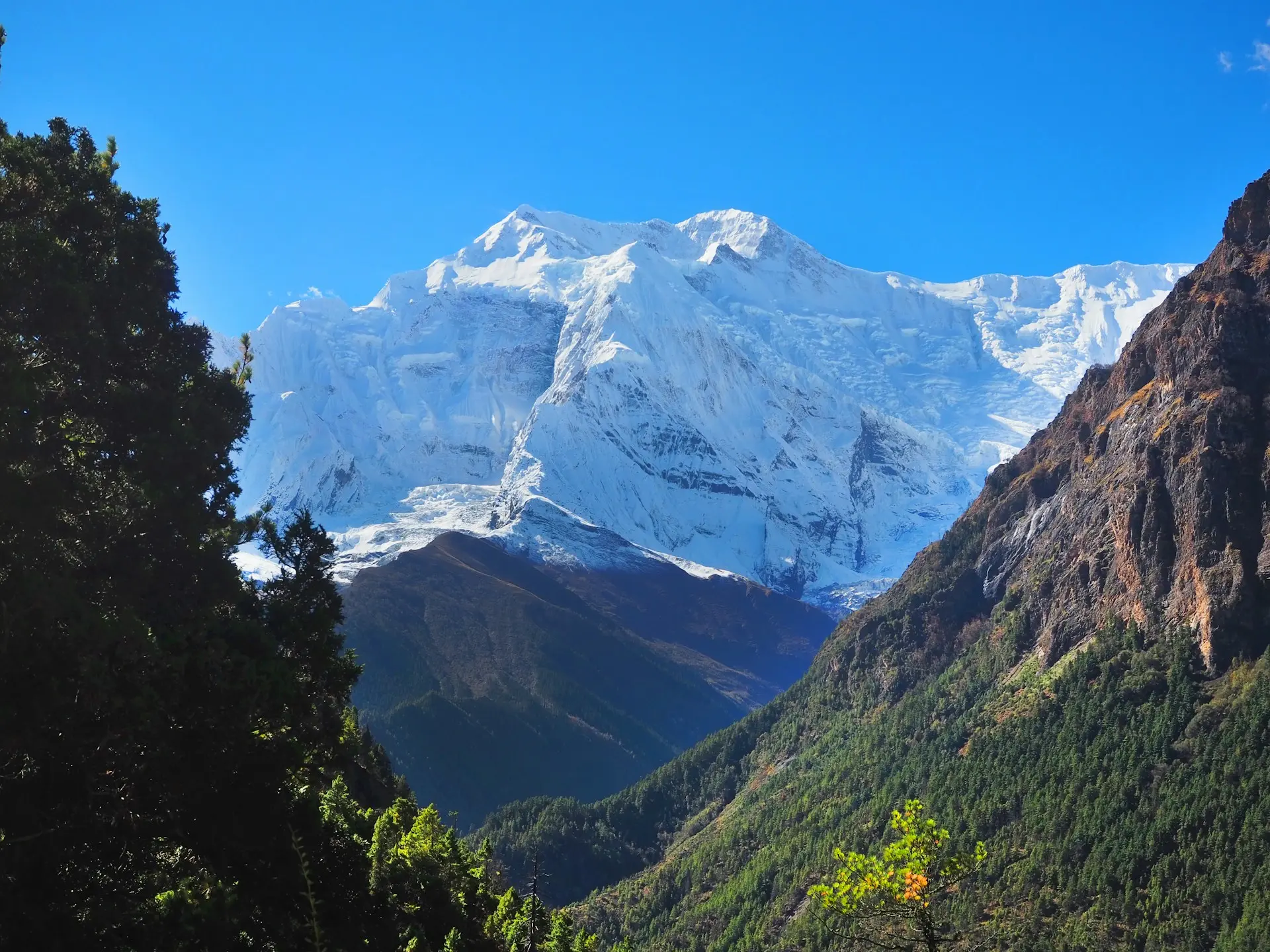
Experience the spectacular Annapurna Circuit Trek with Ram Himalayan Trek, crossing diverse landscapes, traditional Himalayan villages, and the renowned Thorong La Pass. Enjoy breathtaking mountain views, rich local culture, comfortable teahouse stays, and a memorable adventure through Nepal’s magnificent Annapurna region.
The Annapurna Circuit Trek is one of Nepal’s most iconic long-distance treks, offering an unmatched blend of dramatic landscapes, cultural diversity, and high-altitude adventure. This classic journey circles the Annapurna Massif, taking you from subtropical valleys to arid high-mountain deserts, across one of the world’s highest trekking passes—Thorong La Pass (5,416m).
The trek begins in the lush lowlands of the Marsyangdi Valley, passing through terraced fields, waterfalls, and traditional villages inhabited by Gurung and Manangi communities. As you gain altitude, the scenery transforms into alpine forests and stark Himalayan terrain with breathtaking views of Annapurna II, III, IV, Dhaulagiri, Gangapurna, and Manaslu.
A major highlight is crossing Thorong La Pass, a challenging yet immensely rewarding experience offering panoramic mountain views. After descending into the Mustang region, the trek continues to the sacred site of Muktinath, an important pilgrimage destination for both Hindus and Buddhists.
The journey concludes with a scenic descent to Pokhara, allowing time to relax by Phewa Lake after an unforgettable Himalayan adventure. This 15-day Annapurna Circuit Trek is ideal for trekkers seeking a complete Himalayan experience combining nature, culture, and high-altitude challenge.
The Annapurna Circuit Trek is one of Nepal’s most celebrated high-altitude trekking journeys, taking trekkers through a remarkable combination of Himalayan scenery, traditional villages, Buddhist and Hindu cultural heritage, deep valleys, forests, and dramatic mountain landscapes. The itinerary begins with arrival in Kathmandu before traveling toward Besisahar and continuing by road to Dharapani. From Dharapani, the trekking route gradually climbs through Chame, Pisang, and Manang, allowing trekkers to experience the changing landscapes and cultures of the Annapurna region. The acclimatization day in Manang is an important part of the journey before continuing toward Yak Kharka, Thorong Phedi, and the challenging crossing of Thorong La Pass.
After crossing Thorong La, the scenery changes significantly as the trail descends toward the sacred pilgrimage site of Muktinath and continues toward Kagbeni and Jomsom. The journey then moves toward the warmer lower valleys, with a drive to Tatopani followed by trekking to Ghorepani, Poon Hill, and Tadapani. The final days take trekkers to Pokhara before returning to Kathmandu for departure. This combination of high mountains, cultural experiences, natural hot springs, alpine landscapes, and panoramic viewpoints makes the Annapurna Circuit a diverse Himalayan adventure.
The best seasons for the Annapurna Circuit Trek are generally spring and autumn, when weather and trail conditions are usually favorable for trekking. Spring, particularly from March to May, brings relatively stable conditions, pleasant daytime temperatures at lower elevations, and blooming rhododendrons in many forested areas. The mountains can appear particularly impressive during clear mornings, while the landscape becomes colorful as flowers bloom along the lower sections of the route. Autumn, generally from September to November, is another popular trekking period because the monsoon season has usually cleared, creating many opportunities for clear mountain views and comfortable trekking conditions.
Winter can also provide beautiful conditions in the lower and middle sections, but high-altitude areas around Thorong La can become very cold and may experience snow or difficult pass conditions. The monsoon months can bring rain, clouds, muddy trails, and road-related challenges, particularly on the lower sections of the circuit. However, the Manang and Mustang sides of the Annapurna range are partly protected from the monsoon, so some trekkers still visit during this period.
Seasonal considerations include:
The Annapurna Circuit Trek is considered a moderate to challenging Himalayan trek, mainly because of its length, increasing elevation, long walking days, and the crossing of Thorong La Pass at approximately 5,416 meters. Trekkers should be prepared for steep ascents, descents, uneven mountain trails, changing temperatures, and reduced oxygen levels at higher elevations. The itinerary includes an acclimatization day in Manang, which helps the body adjust gradually to increasing altitude. Walking at a steady pace, staying hydrated, eating sufficiently, and allowing adequate rest are important parts of a safe and enjoyable trekking experience.
Transportation is also an important feature of this itinerary. The journey begins with road transportation from Kathmandu toward Besisahar and then continues toward Dharapani, reducing the amount of walking required on the lower section of the traditional circuit. After reaching Muktinath, the itinerary uses road transportation toward the Jomsom and Tatopani areas before trekking again toward Ghorepani. Road conditions can vary according to weather, construction, traffic, and local conditions, so travel times should be considered approximate rather than fixed. Ram Himalayan Trek coordinates the transportation arrangements according to the planned itinerary and prevailing conditions.
Important difficulty and transportation factors include:
Food and accommodation are an important part of the Annapurna Circuit experience. Along the trekking route, trekkers generally stay in local teahouses or trekking lodges that provide simple, comfortable accommodation. Facilities become more basic as the altitude increases, particularly around the higher villages and Thorong Phedi. Rooms commonly feature beds and blankets, while shared bathroom facilities are common in many locations. Hot showers and charging facilities may be available in some lodges for an additional charge, although services can vary according to location and availability.
The food available along the circuit generally combines familiar international trekking meals with traditional Nepali dishes. Dal bhat, consisting of rice, lentils, vegetables, and accompanying dishes, is a popular choice because it provides a filling source of energy for long trekking days. Other common options may include noodles, soups, pasta, potatoes, eggs, Tibetan-style bread, momo, porridge, and other simple meals. Breakfast can include items such as eggs, toast, porridge, pancakes, or hot drinks. At higher elevations, keeping meals simple and maintaining good hydration is particularly useful.
Food and accommodation generally include:
Permits are an essential part of trekking in the Annapurna region. Trekkers on the Annapurna Circuit generally need an Annapurna Conservation Area Permit (ACAP) because much of the route passes through the Annapurna Conservation Area. A TIMS (Trekkers' Information Management System) card may also be required according to the current trekking regulations and applicable arrangements. Permit requirements, fees, registration procedures, and regulations can change, so trekkers should rely on the current requirements applicable at the time of their journey rather than older information found online.
Ram Himalayan Trek can assist with the necessary permit arrangements as part of the trekking preparation. Trekkers should provide the required personal and travel documentation and carry appropriate identification while traveling in the region. Permit checks may take place at designated checkpoints along the trekking route. Having the correct documents before starting the trek helps reduce unnecessary delays and supports compliance with local conservation and trekking regulations.
Permit preparation may involve:
Because regulations can change, Ram Himalayan Trek checks the applicable requirements for the scheduled departure and helps trekkers prepare the necessary documentation accordingly.
Choosing the Annapurna Circuit Trek with Ram Himalayan Trek provides an opportunity to experience one of Nepal's most diverse trekking routes while traveling with an itinerary designed around acclimatization, scenic variety, cultural exploration, and practical transportation arrangements. The 15-day itinerary combines Kathmandu, the Marsyangdi Valley, Manang, Thorong La Pass, Muktinath, Mustang-influenced landscapes, Tatopani, Ghorepani, Poon Hill, and Pokhara. Instead of focusing only on reaching a high mountain pass, the journey allows trekkers to experience the gradual transformation of Nepal's landscapes and communities as elevation and geography change.
Ram Himalayan Trek can assist with the major practical elements of the journey, including trekking arrangements, transportation, accommodation coordination, permit preparation, and itinerary support. The company can also help trekkers understand what to expect from the high-altitude sections and prepare appropriately for the changing conditions. The itinerary includes an acclimatization day in Manang and uses road transportation on selected sections, making it a practical option for travelers who want to experience the Annapurna region without following the entire traditional route exclusively on foot.
Reasons to consider this journey with Ram Himalayan Trek include:
After an early breakfast, begin the scenic drive from Kathmandu toward Besisahar, the traditional gateway to the Annapurna region. The journey follows winding highways alongside rivers, green hills, terraced farmland, and picturesque settlements, providing an excellent introduction to rural Nepal. After reaching Besisahar, continue by local jeep to Dharapani, taking a more mountainous route through valleys and forests. As you gain elevation, the landscape gradually changes, and the surrounding hills become more dramatic. Arrive at Dharapani in the evening, check into your lodge, enjoy dinner, and prepare for your first day of trekking.
Today’s trail takes you deeper into the spectacular Manang Valley as you trek from Chame toward Pisang. The route follows the Marsyangdi River through dense pine and fir forests, with impressive cliffs and mountain scenery appearing around every bend. You will pass through small settlements and enjoy views of dramatic rock formations as the valley gradually opens. As you approach Pisang, the magnificent peaks of Annapurna II and Pisang Peak dominate the horizon. You can choose to explore the traditional village and its monastery after arriving at your lodge. The changing landscape and increasingly dry climate provide a fascinating transition into the high Himalayas.
After breakfast in Manang, begin your trek toward Yak Kharka, gradually leaving the larger settlements of the Manang Valley behind. The trail climbs steadily through increasingly dry and alpine landscapes, with sparse vegetation and spectacular views of the surrounding Himalayan peaks. You will pass through small settlements and open grazing areas where yaks and other mountain animals can often be seen. As the altitude increases, the pace becomes slower and more comfortable to support proper acclimatization. Your Ram Himalayan Trek guide will monitor the group throughout the journey and recommend regular breaks and sufficient hydration. After reaching Yak Kharka, enjoy a warm meal and rest at the lodge while preparing for the higher elevations ahead.
The Annapurna Circuit Trek with Ram Himalayan Trek is organized as a 15-day journey, including arrival in Kathmandu, trekking through the Annapurna region, crossing Thorong La Pass, and returning to Kathmandu. The itinerary also includes transportation between selected sections, allowing trekkers to experience the major highlights without spending the entire journey walking.
The highest point of the Annapurna Circuit Trek is Thorong La Pass, located at approximately 5,416 meters above sea level. Crossing the pass is one of the major highlights and challenges of the journey. Ram Himalayan Trek includes an acclimatization day in Manang to help trekkers prepare for the increasing altitude.
The Annapurna Circuit Trek is generally considered a moderate to challenging high-altitude trek. The difficulty comes from long walking days, steep sections, changing terrain, and high elevation around Thorong La Pass. Good physical preparation, gradual pacing, proper hydration, and following the recommended acclimatization schedule are important for a comfortable trekking experience.
Yes, the itinerary organized by Ram Himalayan Trek includes an acclimatization day in Manang. This rest day provides an opportunity to adjust to the increasing altitude before continuing toward Yak Kharka and Thorong Phedi. Trekkers can use the day for short hikes, exploration, rest, hydration, and enjoying the surrounding Himalayan scenery.
The itinerary combines trekking with road transportation on selected sections. The journey travels from Kathmandu toward Besisahar and continues by road toward Dharapani. After the high-altitude section, transportation is used around the Muktinath, Jomsom, and Tatopani areas before trekking resumes toward Ghorepani. Road conditions and travel times can vary according to local circumstances.
Previous high-altitude trekking experience can be helpful but is not necessarily required for every trekker. A reasonable level of fitness, preparation, and willingness to walk for several hours on consecutive days are important. Ram Himalayan Trek can provide itinerary guidance and preparation information so trekkers understand the terrain, altitude, daily walking requirements, and necessary equipment.
Ram Himalayan Trek provides a structured Annapurna Circuit itinerary covering important destinations such as Manang, Yak Kharka, Thorong Phedi, Thorong La Pass, Muktinath, Jomsom, Ghorepani, and Poon Hill. The company can assist with trekking logistics, transportation, accommodation coordination, permits, and itinerary support, helping travelers focus on experiencing the landscapes and cultures of the Annapurna region.
Spring and autumn are generally regarded as favorable seasons for the Annapurna Circuit Trek. March to May offers pleasant trekking conditions and blooming rhododendrons, while September to November often provides clear mountain views after the monsoon. Winter can be very cold at high elevations, while monsoon conditions may affect roads and lower trails.
Trekkers generally need an Annapurna Conservation Area Permit (ACAP) to enter the Annapurna Conservation Area. A TIMS registration or card may also be required depending on current regulations. Ram Himalayan Trek can assist with the permit process and documentation. Since regulations and fees may change, current requirements should be confirmed before departure.
Accommodation on the Annapurna Circuit is primarily provided by local teahouses and trekking lodges. Most accommodations offer simple rooms, generally with beds and basic facilities, while bathrooms may be shared. Facilities become more basic at higher elevations. Ram Himalayan Trek coordinates suitable accommodation according to the itinerary, availability, and conditions along the trekking route.
A variety of meals is available in teahouses along the Annapurna Circuit. Dal bhat, noodles, pasta, soups, potatoes, eggs, Tibetan-style bread, momo, porridge, and other simple dishes are commonly available. Dal bhat is particularly popular among trekkers because it provides a filling meal. Vegetarian options are widely available along the route.
Trekkers should pack suitable layered clothing, trekking boots, warm clothing, rain protection, a sleeping bag, water bottle, sunglasses, sunscreen, personal medication, toiletries, and essential trekking equipment. Warm layers are especially important for higher elevations and the Thorong La section. Packing should balance preparedness with weight, as trekkers will be carrying equipment throughout much of the journey.
I had an amazing time trekking the Annapurna Circuit with Ram Himalayan Trek. The team took excellent care of us throughout the journey. The landscapes were breathtaking, and the service was outstanding. Thank you for such a wonderful experience!
Amazing guide – highly recommend ! We had an incredible experience trekking the Annapurna Circuit with our guide Ram. From the very beginning he was professional, friendly, and extremely knowledgeable about the route, the mountains, and local culture. He always made sure we were safe, comfortable, and well prepared for each day of trekking. Ram was very supportive, especially on the more challenging parts of the trek, and he adapted the pace perfectly to our needs. Thanks to his experience and calm attitude we felt confident and relaxed the entire time. He also helped us choose great teahouses, explained everything along the way, and made the journey even more enjoyable with his positive energy.
I've been on several treks in the Himalayas, but we found Ram to be an outstanding and professional guide. He gave us space to enjoy the trek and I felt like we were trekking with a friend. When things got rough for us he rose to the occasion, encouraging and physically helping. Even when unluckily we hit bad weather and found bridges and trails washed away he calmly improvised and led us to safety. His knowledge of local geography, flora and fauna provided a fascinating commentary during the trek. We just felt good being with him and highly recommend him.
I had an amazing adventure with Ram as our trekking guide in Nepal! We hiked to the Australian Base Camp and saw phenomenal views of Annapurna One and Fish-Tail Peak! I will return to complete the Annapurna Circuit and will trust Ram to be my guide!
We value your privacy
We use cookies to make your trip planning smoother and improve our services. Learn more