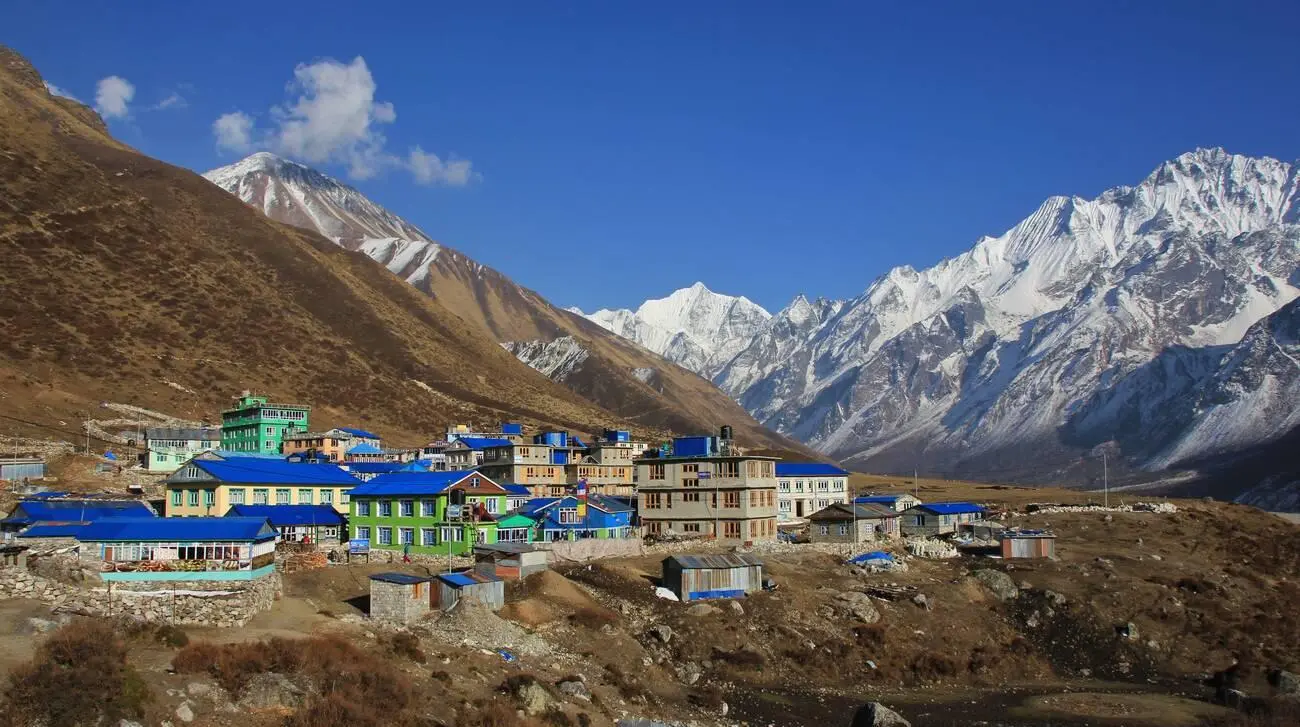
The Langtang Valley trek is a captivating journey into the heart of the Langtang region, offering trekkers a blend of natural beauty, cultural immersion, and panoramic mountain views. Starting from Kathmandu, Nepal's bustling capital, you'll explore on a scenic drive to Syabrubesi, a quaint village nestled in the foothills of the Himalayas.
From Syabrubesi, the trek begins with a gradual ascent through lush forests of rhododendron and oak, alive with birdsong and occasional glimpses of local wildlife. As you trek deeper into the valley, the landscapes unfold with terraced fields, picturesque villages adorned with prayer flags, and the ever-present backdrop of snow-capped peaks.
Passing through villages like Lama Hotel and Ghoda Tabela, where yaks graze peacefully, you'll eventually reach Langtang village, a charming settlement inhabited by the Tamang people known for their warm hospitality and rich cultural heritage. Here, you can immerse yourself in the local way of life, visiting monasteries, sampling traditional cuisine, and interacting with friendly locals.
Continuing further into the valley, the trail ascends to Kyanjin Gompa, a high-altitude settlement surrounded by towering peaks. From here, you can explore the majestic Kyanjin Ri for breathtaking views of Langtang Lirung (7,227m) and other Himalayan giants, or visit the sacred Tserko Ri for a panoramic vista of the entire Langtang range.
The return journey retraces your steps back through the valley, offering different perspectives of the landscape and a chance to savor the memories of your trekking adventure. Each day brings new experiences and opportunities to connect with nature and the local culture, making the Langtang Valley trek an enriching and unforgettable Himalayan experience.
Langtang Valley Trekking is one of Nepal’s most scenic and rewarding Himalayan journeys, offering an excellent combination of mountain scenery, traditional Tamang and Tibetan-influenced culture, forests, glaciers, and high-altitude landscapes. Located north of Kathmandu near the Tibetan border, the Langtang region provides a relatively accessible trekking experience while still reaching impressive elevations. The journey begins with a scenic drive from Kathmandu to Syabrubesi and continues through beautiful villages, rhododendron and bamboo forests, rivers, waterfalls, and alpine meadows. As the trail progresses, trekkers reach Langtang Village and eventually Kyanjin Gompa, a spectacular Himalayan settlement surrounded by snow-covered peaks.
Ram Himalayan Trek organizes the trek according to a carefully planned 10-day itinerary that includes acclimatization at Kyanjin Gompa. The highlight is the hike toward Tserko Ri at approximately 4,985 meters, providing expansive views of Langtang Lirung and surrounding Himalayan peaks. The route then retraces its way through Lama Hotel and Syabrubesi before returning to Kathmandu. This itinerary allows travelers to experience both the natural and cultural richness of the region without requiring an extremely long trekking schedule.
The best seasons for Langtang Valley Trekking are generally spring and autumn, when the weather is comparatively stable, and visibility is usually excellent. Spring, particularly from March to May, brings warmer temperatures at lower elevations and colorful rhododendron forests along the trekking route. The mountain scenery becomes especially attractive during this period, with blooming flowers contrasting against green forests and snow-covered peaks. Daytime conditions are generally suitable for trekking, although temperatures can still fall considerably at higher elevations.
Autumn, from September to November, is another popular period for the Langtang trek. Following the summer monsoon, the atmosphere is often clearer, providing excellent views of the surrounding mountains. October and November are particularly favored by many trekkers because of generally pleasant daytime trekking conditions and crisp Himalayan scenery. Winter trekking can also be possible for experienced hikers, but cold temperatures and snow at higher elevations may make the Tserko Ri ascent more challenging. During the monsoon months, rainfall can affect trails, visibility, and road conditions on the Kathmandu–Syabrubesi route.
Seasonal considerations:
Langtang Valley Trekking is generally considered a moderate to moderately challenging Himalayan trek. It does not require technical mountaineering skills under normal trekking conditions, but trekkers should be prepared for several hours of walking each day, steep uphill and downhill sections, uneven mountain trails, and increasing altitude. The itinerary reaches Kyanjin Gompa at around 3,870 meters, while the optional or planned Tserko Ri hike reaches approximately 4,985 meters. Proper acclimatization, gradual ascent, hydration, and a suitable walking pace are therefore important.
Transportation for the itinerary begins with a road journey from Kathmandu to Syabrubesi, the main starting point of the trek. Depending on road and weather conditions, the drive can be long and sometimes bumpy because mountain roads are winding and conditions can change. From Syabrubesi onward, the journey is primarily on foot. After completing the trek, trekkers walk back to Syabrubesi and take a vehicle to Kathmandu. Ram Himalayan Trek can arrange the necessary transportation and trekking logistics as part of the organized journey.
Difficulty and transportation at a glance:
Food and accommodation are important parts of the Langtang Valley Trekking experience. Accommodation along the route is generally provided in local teahouses or mountain lodges. These establishments offer basic but comfortable facilities designed for trekkers. Rooms are commonly simple, with beds and blankets, while bathroom facilities may be shared, particularly at higher elevations. Availability and facilities can vary from village to village, so travelers should expect a traditional Himalayan trekking environment rather than city-style hotels.
Meals are normally available at teahouses along the trekking route. Common choices include dal bhat, noodles, rice dishes, soups, pasta, potatoes, Tibetan-style breads, eggs, vegetables, and other simple meals. Dal bhat is particularly popular because it provides a filling combination of rice, lentils, vegetables, and other accompaniments. Hot tea, coffee, and other beverages are also commonly available. Trekkers should drink sufficient water during the trek and follow sensible food and hygiene practices. Ram Himalayan Trek can help coordinate accommodation and meals according to the trekking package and available facilities along the route.
Typical food and accommodation features:
Trekkers entering the Langtang region need to follow Nepal’s applicable trekking and conservation regulations. The Langtang Valley route passes through Langtang National Park, so a Langtang National Park entry permit is required. Depending on the current regulations and trekking arrangement, trekkers may also need the applicable TIMS (Trekkers’ Information Management System) card or registration. Permit requirements, fees, and procedures can change, so travelers should confirm the latest requirements before beginning their journey.
For travelers trekking with Ram Himalayan Trek, the company can assist with the necessary permit and documentation arrangements as part of the trekking preparation. Trekkers should carry their passport or required identification documents because these may be needed during permit processing and at checkpoints. Having the correct documentation helps ensure that the trek proceeds smoothly through the regulated areas of the Langtang region.
Common documentation considerations:
Choosing Langtang Valley Trekking provides an opportunity to experience a remarkable Himalayan landscape within a relatively compact itinerary from Kathmandu. The trek combines dramatic mountain scenery with forests, traditional villages, Buddhist cultural sites, and high-altitude viewpoints. Unlike some longer Himalayan journeys, the Langtang route offers a practical trekking experience for travelers who want to explore the mountains without committing to several weeks on the trail. The combination of Kyanjin Gompa, the surrounding peaks, and the Tserko Ri excursion creates a varied itinerary with both cultural and natural highlights.
Ram Himalayan Trek focuses on organizing the journey around the practical needs of trekkers, including itinerary planning, transportation, permits, accommodation coordination, and trekking support. A properly organized itinerary is particularly valuable in a high-altitude environment, where weather, trail conditions, acclimatization, and daily walking distances need to be considered carefully. The company can also help travelers prepare for the trek by providing information about packing, suitable clothing, altitude awareness, and general trekking preparation.
Reasons travelers may choose Ram Himalayan Trek include:
Upon your arrival at Tribhuwan International Airport in Kathmandu, our representative will meet you and transfer you to your hotel. Take the rest of the day to relax and explore the vibrant streets of Kathmandu, soaking in the rich cultural heritage of the city.
After an early breakfast, explore on a scenic drive from Kathmandu to Syabrubesi, the starting point of your Langtang Valley trek. The journey takes approximately 7-8 hours via private jeep, passing through picturesque landscapes, terraced fields, and rustic villages. Upon arrival, settle into your lodge and enjoy the serene surroundings.
Begin your trek towards Lama Hotel after breakfast. The trail winds through dense forests of pine and rhododendron, with occasional views of cascading waterfalls and snow-capped mountains. Lama Hotel, nestled amidst the forest, offers a peaceful retreat for the night after a 6-hour trek.
Today’s trek takes you further up the valley towards Langtang Village. The trail gradually ascends, providing stunning views of the Langtang range. Langtang Village, with its Tibetan-style houses and prayer flags fluttering in the wind, offers a glimpse into the local Tamang culture. Trekking duration is approximately 7 hours.
Continue trekking towards Kyanjin Gompa, a scenic village famous for its ancient monastery and cheese factory. The trail ascends steadily, passing through yak pastures and crossing glacial streams. Upon reaching Kyanjin Gompa, enjoy breathtaking views of Langtang Lirung and other peaks. Trekking time is about 3 hours.
Today is set aside for acclimatization and exploration. Hike to Tserko Ri, a viewpoint offering panoramic views of the Langtang range and surrounding peaks. The hike takes approximately 8-9 hours round trip, including time to soak in the awe-inspiring vistas from the summit.
After breakfast, begin your descent towards Lama Hotel. Retrace your steps through the picturesque landscapes, enjoying the downhill trek with views of lush forests and distant Himalayan peaks. Overnight at Lama Hotel, trekking for about 6-7 hours.
Continue descending from Lama Hotel back to Syabrubesi. The trail winds through rhododendron and pine forests, offering occasional glimpses of wildlife. Enjoy the last stretch of your trek with the serene ambiance of the Langtang region. Overnight in Syabrubesi after a 6-7 hour trek.
Today marks the return journey to Kathmandu. Enjoy a scenic drive back, reflecting on your trekking adventure and soaking in the landscapes one last time. The drive takes approximately 8-9 hours, and upon arrival in Kathmandu, you'll be transferred to your hotel.
After breakfast, depending on your flight schedule, you may have some free time for last-minute shopping or sightseeing in Kathmandu. Our representative will transfer you to the airport for your onward journey or homeward-bound flight, marking the end of your memorable Langtang Valley trekking experience.
Langtang Valley Trekking is a scenic Himalayan adventure in Nepal that takes travelers from Kathmandu toward Syabrubesi and through beautiful mountain villages to Kyanjin Gompa. The trek combines spectacular mountain scenery, forests, glaciers, Buddhist culture, and traditional Tamang communities. With Ram Himalayan Trek, travelers can follow a carefully organized itinerary covering the major highlights of the Langtang region.
The itinerary provided by Ram Himalayan Trek takes 10 days, including arrival in Kathmandu and final departure. The actual trekking section begins after the drive to Syabrubesi and includes the journey through Lama Hotel, Langtang Village, and Kyanjin Gompa. An acclimatization day is included at Kyanjin Gompa for the hike toward Tserko Ri before returning through Lama Hotel and Syabrubesi.
The highest point on this itinerary is Tserko Ri, at approximately 4,985 meters (16,355 feet). The viewpoint is reached during the acclimatization day from Kyanjin Gompa. The ascent provides impressive Himalayan scenery, but the elevation makes the hike physically demanding. Trekkers should maintain a steady pace, stay hydrated, and follow appropriate altitude-acclimatization practices throughout the journey.
Langtang Valley Trekking is generally regarded as a moderate to moderately challenging trek. It does not normally involve technical climbing, but trekkers need to walk for several hours on uneven mountain trails with regular ascents and descents. The increasing altitude, especially around Kyanjin Gompa and Tserko Ri, adds to the challenge. Ram Himalayan Trek can provide preparation guidance and trekking support for the journey.
The Langtang Valley Trek begins with a road journey from Kathmandu to Syabrubesi. The route passes through changing landscapes and mountain settlements before reaching the trekking starting point. Mountain roads can be winding and conditions may vary according to weather and road maintenance. Ram Himalayan Trek can arrange transportation as part of the trekking program and provide guidance regarding the expected journey and road conditions.
Yes. The itinerary includes an acclimatization day at Kyanjin Gompa, where trekkers undertake a hike toward Tserko Ri. Spending time at this elevation allows travelers to adjust gradually to the thinner air while also exploring the spectacular surrounding landscape. Proper acclimatization is important when trekking at higher elevations, and Ram Himalayan Trek can provide guidance on pacing, hydration, rest, and altitude awareness.
Ram Himalayan Trek provides organized trekking services designed to make the Langtang journey practical and well coordinated. The company can assist with itinerary planning, transportation, permits, accommodation arrangements, trekking support, and general preparation. The itinerary also incorporates an acclimatization day and the Tserko Ri excursion, allowing travelers to experience major attractions of the Langtang region while following a structured trekking schedule.
Spring and autumn are generally considered favorable seasons for Langtang Valley Trekking. March to May offers pleasant trekking conditions at many elevations and colorful rhododendron forests, while September to November commonly provides clear Himalayan views after the monsoon. Winter is colder and can bring snow at higher elevations, while monsoon months may bring rain, clouds, and muddy trails. Weather conditions should always be checked before departure.
Accommodation during the Langtang Valley Trek is mainly provided in local teahouses and mountain lodges. Rooms are generally simple and may include beds, mattresses, blankets, and basic furnishings. Bathroom facilities are often shared, particularly at higher elevations. The facilities are designed primarily for trekkers, so travelers should expect a comfortable but basic Himalayan experience rather than luxury accommodation. Ram Himalayan Trek can coordinate accommodation according to the itinerary and local availability.
Teahouses along the Langtang trekking route generally serve a variety of simple and filling meals. Dal bhat, noodles, rice, vegetables, potatoes, soups, eggs, pasta, Tibetan-style bread, and other local dishes are commonly available. Hot tea and coffee are also popular among trekkers. Dal bhat is particularly useful during trekking because it provides a substantial meal. Ram Himalayan Trek can help coordinate meals while considering the available options along the trail.
Yes, trekkers need to comply with the applicable entry and trekking regulations for the Langtang region. Because the route passes through Langtang National Park, an appropriate national park entry permit is required. Depending on current regulations, TIMS registration or other documentation may also apply. Requirements and fees can change, so travelers should verify the latest rules before departure. Ram Himalayan Trek can assist with the necessary permit arrangements.
Trekkers should pack according to the season, elevation, and expected weather conditions. Essential items generally include trekking shoes, warm layers, waterproof clothing, comfortable trekking trousers, gloves, a hat, sunglasses, sunscreen, a reusable water bottle, personal toiletries, and a suitable backpack. A sleeping bag can also be useful depending on the accommodation and season. Ram Himalayan Trek can provide a more detailed packing checklist during trek preparation.
My friend and I had the pleasure to have Ram as our guide on a Langtang Valley trek. What can I say: Ram was the perfect guide and made our holiday very special despite terrible storms. Torrential rain, uncharacteristic for the time of year, caused landslides, destroying the paths and bridges needed for our return journey; but Ram's special knowledge of the terrain meant that he was able to guide us to safety by climbing, yet higher, on an improvised route above the level of the landslides before beginning our decent on the other side. All the time, Ram had special regard for my safety and kept a close watch on me, aware that my age made me vulnerable to falls. I have no hesitation in recommending Ram. He is the one you can trust to keep you safe whatever conditions you encounter, whilst also making your trek both adventurous and fun. You will not be disappointed if you choose Ram as your guide! Roger Tolfree, England
We value your privacy
We use cookies to make your trip planning smoother and improve our services. Learn more